RETURN TO LEARN
CONSULTATION SERVICES
|
Personal
Consultation Services
For Student-Athletes With
A
Sport-Related Concussion
Unique
Rehabilitation Program
Designed to Help Your Child
Return to School
School and Home Rehabilitation Plan Will Be Worked Out With
Classroom Teachers
Specific Strategies Designed to Reduce The Risk of Repeat
Concussions
|
Contact
Robert Kirwan For More Information About These Services
(705) 969-7215 or
(705) 586-PURE (7873)
or email
rkirwan@infocomcanada.com |
|
|

|
HOPE FOR TOMORROW
Concussion Management
Program Development
Workshop
|
For School Boards
& Minor Sports |
|
PDF INFORMATION PACKAGE
|
|

|
|
|
|
|
|
Concussion Management
Consultation Services |
|
For School Boards |
|
PDF INFORMATION PACKAGE
|
|
|
|
|
|
|
|
Concussion Management
Consultation Services |
|
For Minor Sports |
|
PDF INFORMATION PACKAGE
|
|
|
|
|
|
|
|
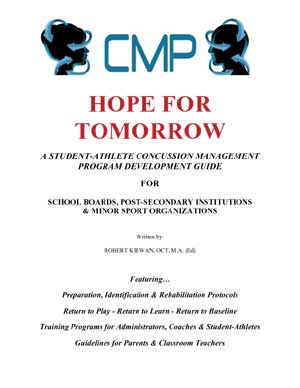
CMP Program
Development Guide
Click for a free PDF copy
of the Book
|
|
|
|
|
|
|

|
|
|
|
| |
|
|
|
| |
|

|
|
|
|
|
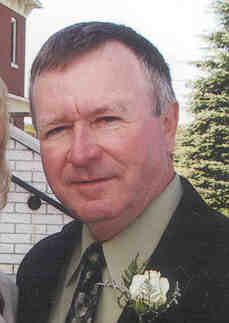
Robert Kirwan, M.A. (Ed),
OCT
Student-Athlete
Concussion
Management Specialist
"The Paradigm Shift in Healthcare"
|
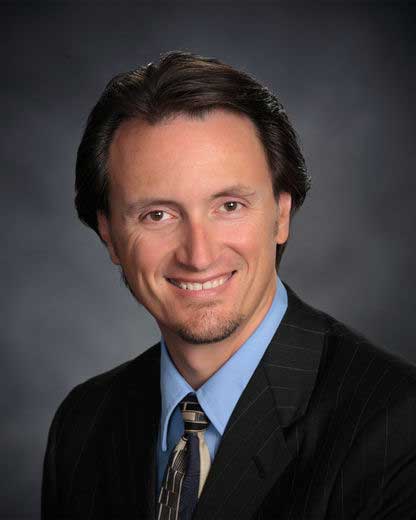
Dr. Michael Czarnota, Ph. D
Licensed
Neuropsychologist
&
Credentialed
ImPACT Consultant
Consulting
Neuropsychologist For Canadian Major Junior Hockey & Hockey
Canada |
|
|
OUR
MISSION IS TO BECOME ONE OF
THE WORLD'S FOREMOST RESOURCES ON STUDENT-ATHLETE CONCUSSION MANAGEMENT |
|
| Dr. Michael Czarnota, Ph. D., a practicing
Neuropsychologist and Credentialed ImPACT Consultant with extensive
experience dealing with sport-related concussions, and Mr. Robert
Kirwan, who holds a Master’s Degree in Education and is currently
serving as an elected School Board Trustee in the Province of
Ontario following a successful 28 year career as an Ontario
Certified Teacher, are the founding partners of CMP Concussion Management Partners Inc. a firm
that has been established in order to provide student-athlete
concussion management services to school boards
and minor sport organizations in Canada and the United States. Their
range of services are described by going to the following link: Services
 Robert
Kirwan is a life-long educator who currently operates a private
practice known as The Greater Sudbury Learning Clinic. Mr. Kirwan, a
Student-Athlete Concussion Management Specialist, will be providing consultation services
with respect to the academic implications of sport-related
concussions among
student-athletes, including recommended accommodations for
consideration by classroom teachers, home care
guidelines for parents and lifestyle adjustments student-athletes
must consider when dealing with the effects of a concussion.
He
will work with parents and classroom teachers to help them better
understand how to identify the
signs, symptoms and behaviours consistent with concussion and then
assist in the development of an appropriate rehabilitation program
which will have the best chance of achieving full recovery and a
return to pre-injury academic levels. You can set up an appointment
with Mr. Kirwan by calling (705) 969-7215.
You can also email him directly at rkirwan@thelearningclinic.ca Robert
Kirwan is a life-long educator who currently operates a private
practice known as The Greater Sudbury Learning Clinic. Mr. Kirwan, a
Student-Athlete Concussion Management Specialist, will be providing consultation services
with respect to the academic implications of sport-related
concussions among
student-athletes, including recommended accommodations for
consideration by classroom teachers, home care
guidelines for parents and lifestyle adjustments student-athletes
must consider when dealing with the effects of a concussion.
He
will work with parents and classroom teachers to help them better
understand how to identify the
signs, symptoms and behaviours consistent with concussion and then
assist in the development of an appropriate rehabilitation program
which will have the best chance of achieving full recovery and a
return to pre-injury academic levels. You can set up an appointment
with Mr. Kirwan by calling (705) 969-7215.
You can also email him directly at rkirwan@thelearningclinic.ca
|
New Study In
Ontario Reveals That As Many as 20% of All Adolescents Say
They Have Had A Concussion In Their Lifetime |
|
TORONTO, June 25, 2013—One in five adolescents surveyed in
Ontario said they have suffered a traumatic brain injury that
left them unconscious for five minutes or required them to be
hospitalized overnight, a statistic researchers in Toronto say
is much higher than previously thought.
Sports such as ice hockey and soccer accounted for more than
half the injuries, said Dr. Gabriela Ilie, lead author of the
study and a post-doctoral fellow at St. Michael's Hospital.
Traumatic brain injuries, such as concussions, were reported
more often by males than females, by those with lower school
grades and by those who used alcohol or cannabis in the previous
12 months, she said.
The study was to be published Wednesday (June 26) in the
Journal of the American Medical Association.
Dr. Ilie said this is one of the first studies of traumatic
brain injury to focus only on adolescents and to include all of
their self-reported TBIs. Most previous studies based their
reporting only on hospital records. Concussion is the most
common form of traumatic brain injury. The data used in the
study were from the 2011 Ontario Student Drug Use and Health
Survey (OSDUHS) developed by the Centre for Addiction and Mental
Health.
The survey, one of the longest ongoing school surveys in the
world, contains responses from almost 9,000 students from Grades
7-12 in publicly funded schools across Ontario. The OSDUHS began
as a drug use survey, but is now a broader study of adolescent
health and well-being. For the first time in 2011, questions
about traumatic brain injury were added to the survey.
"The questions about TBI were added to the OSDUHS because
there were no current data on prevalence in the adolescent
population," said Dr. Robert Mann, a senior scientist at CAMH
and director of the OSDUHS. "Early research has indicated that
there may be links between TBIs and mental health and substance
use during adolescence – we plan to study this in the near
future."
The survey found that 20 per cent of adolescents in Ontario
said they had had a traumatic brain injury in their lifetime. It
found that 5.6 per cent of them had had such an injury in the
past 12 months.
Dr. Ilie said this suggests the prevalence of TBI among young
people is much higher than previously known, because many head
injuries remain uncounted when they are not being reported to
parents, teachers, sports coaches or health care workers. In
Canada, 50 per cent of all injuries that kill and disable youth
involve a TBI.
This new research found that 46.9 per cent of the TBIs
reported by adolescent females occurred during sports (e.g.,
hockey, skate boarding); the figure was 63.5 per cent for males.
Students who reported drinking alcohol
occasionally/frequently and those who reported using cannabis 10
or more times over the past 12 months had more than five times
and more than three the odds, respectively, of acquiring a
traumatic brain injury in the past 12 months than students who
reported abstinence. The survey also showed that students who
reported overall poor grades at school (below 60 per cent) had
almost four times the odds of a lifetime acquired brain injury
than students who reported grades at or above 90 per cent.
"Traumatic brain injury is preventable," said Dr. Ilie. "If
we know who is more vulnerable, when and how these injuries are
occurring, we can talk to students, coaches, and parents about
it. We can take preventive action and find viable solutions to
reduce their occurrence and long-term effects."
Brain injuries among adolescents are particularly concerning
because their brains are still developing. There is growing
evidence that people who have had one or more concussions are at
greater risk of future concussions, and evidence that multiple
brain injuries can result in lasting cognitive impairment,
substance use, mental health and physical health harms.
Source: St.
Michael's Hospital
|
|
|
|
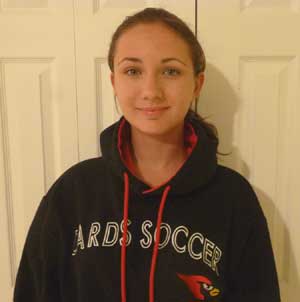 STUDENT-ATHLETES
LIKE CANDACE STUDENT-ATHLETES
LIKE CANDACE
ARE CALLING OUT FOR HELP
Candace
is a a typical teenage girl who just wants to enjoy
the benefits of playing sports for her high school
while she is developing her academic skills in
preparation for post-secondary school. A concussion
during a soccer game may have altered the course of
her life. Watch this short video and listen to her
plea for help on behalf of all boys and girls like
her, who just want to be able to get the most that
life has to offer as student-athletes.
http://www.youtube.com/watch?v=PiKSzCIFy-0
“I wish more
people knew about concussions and knew how to treat it
and how to treat persons who have a concussion. It’s
difficult feeling helpless and not being able to
explain to someone what happened to you or how it
happened because you don’t know, You blacked out. You
can’t explain how you got hit. No one understands that
this is the amount of pain I’m in
and even if
you have headaches once in a while you are not going
to be able to compare it to mine. You don’t understand
the pain. No one sits back and does research on it.
They all just assume that it’s a “bonk” and you’re
done in two weeks that you’re fine. But really it’s
more complex than that. No one takes the time to
research it and understand it.”
IT'S TIME TO ANSWER THE
CALL
It's time for all people in
leadership positions to take significant steps to
protect the well being of all students like Candace.
It's time for us to do more than just point coaches,
students and parents to web sites for information
about concussions. It's time for us to develop local
concussion management programs that include specific
protocols and procedures, arrangements with sports
medicine specialists who will see injured athletes the
day after an injury, training for teachers so that
accommodations can be made in the classroom to
facilitate return to learn rehabilitation, counselling
for injured student-athletes and their parents so that
they understand what is happening to them, and a whole
new approach to safe play coaching to minimize the
risk of concussions.
CANDACE'S CONCUSSION
STORY
For the full story about the
concussion that Candace suffered as well as an
opportunity to watch the complete interview on video,
CLICK HERE>>>>
==
|
|
|
|
|
Tens of Thousands of
Ontario
Students May Be At Risk
of Long-Term Effects
|
| On
March 6, 2012, former Ontario
Education Minister, Laurel Broten, received the support
of all parties by introducing Bill 39, Education
Amendment Act (Concussions), 2012 to the
Ontario
legislature. The Act received first reading and was in
committee stage when parliament was prorogued and all
bills that had not reached second reading automatically
died on the table.
The
Legislation will not be reintroduced. Instead, the
Ministry of Education has decided to introduce a new
concussion protocol which is outlined in the Ontario
Physical Health Education Association policy web site. CLICK
HERE FOR MORE
While much of the information is relevant and
useful, there is still a lot of detail that should be
added for local teachers and coaches to understand
We now have very reliable proof that tens of
thousands of students attending elementary and secondary
schools in
Ontario
may be walking around with mild
traumatic brain injuries that place them at risk for
life-altering consequences from multiple concussions.
The most revealing evidence was included in a
special publication of the Ontario School Boards’
Insurance Exchange on concussions. The OSBIE provides
insurance coverage for almost all school boards in
Ontario
. Each school is required to maintain
incident reports to record the details of accidents and
injuries that are experienced by students.
During 2011, a total of 634 incident reports were labeled
as concussions or possible concussions. Of this, only
60%, or approximately 400 were sport-related. With
approximately 1 million students enrolled in Grades 7
through 12 alone, the fact that only 400 sport-related
injuries were labeled as concussions or possible
concussions is great cause for concern.
Experts from the medical field tend to agree that the
annual rate of concussions for sports like hockey,
football and soccer typically range from 15 to 20%. With
over 900 secondary schools in Ontario, many of which
offer competitive hockey, football and soccer programs
for both boys and girls, to see only 400 sport-related
incident reports labeled concussions or possible
concussions is a clear indication that this type of
injury is being grossly under reported or unidentified.
Consider still that aside from injuries
attributed to playing for school teams, students may
also receive concussions during physical education
classes, intramural sports and in pick-up games in the
school yard or at home, to say nothing about the number
of students who receive concussions while playing on a
minor sport team.
Representatives from St. Michael’s College, an
all-boy Grade 7 to 12 private school in
Toronto
, made a presentation about their
concussion management program during the OuCH! Outcomes
Following Concussion in Hockey 2012 Conference, which
was held at St. Michael’s Hospital on September 8,
2012. It was pointed out that during the previous year
they recorded 80 concussions out of the approximately
1000 boys who were enrolled in the school.
St. Michael’s College has such an effective program
that very few concussions go undetected, but other than
that, they are representative of most public and
independent high schools throughout
Ontario
. If we projected their rate of
concussions across the province, it means that we could
expect up to 80,000 sport-related concussions out of the
1 million students we have enrolled in Grades 7 to 12
alone. And yet we had less than 400 recorded incidents
during 2011.
Dr. Michael Czarnota, Ph. D., is the primary
consulting neuropsychologist for most of the Major
Junior leagues in
Canada
, including the OHL, the QMJHL, and the
WHL. He is also involved in the same capacity with the
CHL, the NOJHL, the EPHL and has worked with the
Women’s Hockey Association and Hockey
Canada
. Dr. Czarnota is concerned that if we do
not become more successful in identifying concussions
when they first occur, there is great danger that
student-athletes may suffer serious consequences from
multiple concussions because of their increased
vulnerability once the brain is in an injured state.
“To better understand what takes place in the brain
when you receive a concussion, just think of what
happens when you have a scab on your skin that forms
from a small cut. If you leave the scab alone and allow
it to heal, there shouldn’t be any remaining sign of
the original injury. However, if you pick at the scab it
may become larger or infected. Moreover, it will take
longer for the wound to heal and there is a good chance
that there will be a permanent scar left on the skin.
The same thing happens to the brain with concussions. If
you follow a rehabilitation program that includes
physical and cognitive rest, there is a good chance that
the injury will heal and you won’t have any long term
symptoms. However, if you continue to play sports and
end up subjecting the brain to excessive stimulation
while the first concussion is healing, you may prolong
the recovery period and you may also receive additional
concussions which could end up leaving you with
permanent long-term symptoms. The key is identifying the
injury in the first place. ”
I am afraid that many school boards may be waiting
for the legislation to be passed before they develop or
revise their own formal concussion management programs
in order to be in compliance with the new regulations
that are expected. In the meantime, tens of thousands of
students may be slipping through the cracks while
classroom teachers, phys. ed. Instructors, school
coaches and even parents are unaware that they are
placing so many students in grave danger. If they
don’t know their students are injured, then teachers
cannot be expected to make the necessary accommodations
in the classroom which will help with the recovery
process and allow the student to cope with the academic
program.
It is suggested that School Boards should
at least take time to review and evaluate the
effectiveness of their existing concussion management
programs in light of the report from OSBIE. We’ve
already heard enough from the experts about the nature
of traumatic brain injuries to be able to develop formal
preparation, identification and rehabilitation protocols
that will ensure the safety and well-being of our
student-athletes. We just need the will to take the
knowledge we already have and make the necessary
enhancements once we identify the weaknesses of our
current practices. This review, evaluation and revision
of existing concussion management programs is something
that should not be delayed. Multiple
concussions have unpredictable cumulative effects on
cognitive, emotional and psychological functions and may
leave a person with a life-time of memory and vision
impairment, headaches, dizziness, and even cause serious
mental health problems later on in life.
I would like to invite members
of school boards and minor sport organizations to
contact me by email at robertkirwan@concussionmanagementpartners.com,
by phone at (705) 969-7215 or download our 287 page Program
Development Guide and begin doing something positive
and concrete to develop your own student-athlete
concussion management program that will easily meet any
requirements outlined in OPHEA and from possible pending
legislation that may be coming from the Ministry at some
point in the future. We can’t afford to wait any longer.
FOR A FULL PDF COPY OF THE ISSUE CLICK HERE |
|
| |
|
Enough Talking &
Listening!
Now Is The Time For Action! |
| During the past few years we have been
inundated with a vast amount of information about the
seriousness of concussions and about the signs and symptoms to
be looking for. Dr. Czarnota and Mr. Kirwan feel that parents,
coaches, teachers, volunteers and the leaders of school boards
and minor sport organizations now need to take this
information and focus on the development of actual protocols
and procedures which will be applied to their teams and
players. It is no longer acceptable to merely continue to
listen to what experts have to say. We must now decipher this
information and make it work in a practical and effective
manner on a day-to-day basis. |
|
| |
|
Collective Denial of
Concussions Has Reached Dangerous Levels |
| There is growing evidence to support
claims that as many as 95% of all concussion injuries to
young people are unreported or unidentified. This is a
form of Collective Denial or Willful Blindness that is
reaching dangerous levels and is placing our young
people at risk of significant life-altering consequences
which may produce symptoms that affect their quality of
life as adults. The nature of concussions is such that
it is easy for parents, coaches and student-athletes to
ignore initial symptoms or pass them off as being caused
by the flu, having the wind knocked out, being tired,
etc. The vast majority of suspected concussions never
get to the medical doctor stage. We are trying to
increase the chance of identifying concussions properly
when they occur so that proper rehabilitation procedures
may be put in to place to assist recovery. |
|
| |
|
Consensus statement
on concussion in sport: the 4th International Conference
on Concussion in Sport held in Zurich, November 2012 |
| The much anticipated Consensus Statement
on Concussion in Sport from the 4th International
Conference on Concussion in Sport, held in Zurich in
November 2012 is provided for your viewing below. You
will find many sections of the report that will confirm
the principles that are recommended by CMP Concussion
Management Partners with respect to the Partnership
Approach to concussion management. There is consensus
that when it comes to identifying and managing
concussions among children and adolescents, there is a
need for doctors to seek input not only from parents and
the child, but also from teachers. We are especially
pleased to see the recommendation that successful return
to school should precede return to play for a
student-athlete who suffers from a concussion. |
CLICK
HERE
For a link to the British Journal of Sport
Medicine Copy with links to related reference
articles and studies |
CLICK
HERE
For a PDF Copy of the Consensus Statement that you
can download to your computer. |
|
Robert Kirwan provides a brief
analysis of the Consensus Statement with
highlighted notes and reference to the CMP Program
Development Guide: CLICK
HERE |
|
|
| |
|
Expert Facilitators
Work With School Boards & Minor Sport Organizations |
| Many school boards and minor sport
organizations are struggling to create concussion
management protocols that will meet the needs of their
student-athletes. Dr. Czarnota and Mr. Kirwan are
finding that what many of the school boards and
organizations need is an outside facilitator to help
"kick-start" the process. We will work with
representatives to help them develop the framework for a
customized concussion management program and have a 300
page Program Development Guide which contains the best
options from which to select. |
|
| |
|
One Day Workshops
Available |
|
Dr. Czarnota and Mr. Kirwan will be providing
coaches, parents, volunteers and teachers from school boards and
minor sport organizations with an opportunity to attend a one-day
workshop which will include
informative and thought-provoking presentations along with
interactive group discussion sessions.
The workshop is designed to
help establish the foundation for a new and/or revised concussion
management program for young athletes and will include the most
practical, effective and up-to-date procedures and protocols for
sport-related concussion identification and rehabilitation.
WORKSHOP
TOPICS
-
Training programs for Administrators, Coaches and
Student-Athletes;
-
Preparation, Prevention and Safety Guidelines
designed to reduce the risk of concussions;
-
Effective & Easy to follow Identification &
Rehabilitation protocols;
-
Comprehensive Guidelines for Parents/Guardians;
-
“Return to Learn”
Guidelines for Classroom Teachers;
-
Universally accepted progressive
“Return to Play” strategies for coaches and
student-athletes;
TRAINING
CERTIFICATION
A Certificate of Participation, signed by the
workshop leaders, will be provided to each person who attends one of
the CMP Concussion Management Workshops as verification of training
in concussion management.
Special in-service training sessions may also be held for
classroom teachers, physical education directors, school
administrators or parents.
HOSTING A WORKSHOP
Once
a host sponsor has been secured for a particular city, details
will be announced with respect to the date, location, etc. A Host Sponsor may be a local school board or group
of school boards; a local minor sport organization or group of minor
sport organizations; or a local corporate sponsor or group of
corporate sponsors that has decided to provide the workshop for one
or more school boards and/or minor sport organizations in the
surrounding community.
We anticipate that the host sponsor will be covering most
if not all of the expenses for these workshops in order to
ensure that any parent, coach, volunteer, teacher or
administrator will be able to attend and become better
equipped to deal with concussions in student-athletes. |
|
|
|
|
WE'LL SEND
YOU A FREE COPY OF OUR
CMP PROGRAM DEVELOPMENT GUIDE |
|
|
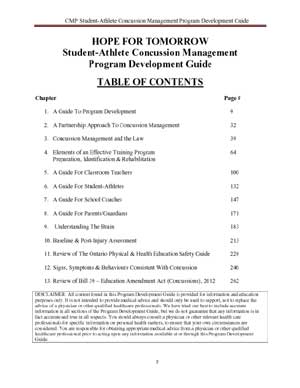 |
| This
Program Development Guide is a 287 page compilation of a
wide variety of information and material which has been
found through extensive research and study of
sport-related concussions. It is intended to be
used as a resource document for people who wish to
develop their own concussion management program. Click
on the link above to download the most recent copy of
the Program Development Guide. If you have any
questions, contact Mr. Robert Kirwan by email or phone
at 705-969-7215 |
|
|
|
|
|
FOR MORE
INFORMATION |
| More details regarding the administration and
organizational details as well as the fees and costs associated with
hosting one of the workshops, or accessing consulting services can be obtained by contacting Mr.
Robert Kirwan.
by email at rkirwan@infocomcanada.com
or by phone at 705-969-7215 |
|
|
|
|
|
|
RADIO
INTERVIEWS
|
|
|
 |
| Robert Kirwan was the guest on a live talk
radio show with host Dave Ferguson on Blog Talk Radio on
August 29, 2012. Dave's web site can be found at www.beyondthecheers.com |

|
|
|
|
| |
|
NEXTSPORTSTAR.COM |
|

|
The Breakfast Club with
Bryan Angus and Billy Hayes
February 15, 2013
|
| Robert Kirwan was the guest on The
Breakfast Club hosted by Bryan Angus and Billy
Hayes. This is a video / radio show found on Next
Sport Star Dot Com. |
|
|
|
|
|
| |
|
THE HOCKEY SOURCE |
|

|
The
Hockey Source
TSN 1050 with
Jack Ray and Kevin Huhn
February 17, 2013 |
| Robert Kirwan and Dr. Michael Czarnota
were guests on The Hockey Source which hosted by Jack
Ray and Kevin Huhn on TSN AM 1050 on February 17, 2013 |
|
|
|
|
|
|
|
| Robert Kirwan was the guest on a live talk
radio show with host Dave Ferguson on Blog Talk Radio on
September 4, 2013. Dave's web site can be found at www.beyondthecheers.com |
|
|
|
|
|
|
|
|